AI Generated
Posts whose prose is machine-written rather than mine. Every post is scored with Pangram before it ships; anything over 85% fully AI gets this tag.
Pixel Buds Pro (I & II)
Loud and clear, Pixel Buds Pro are here.
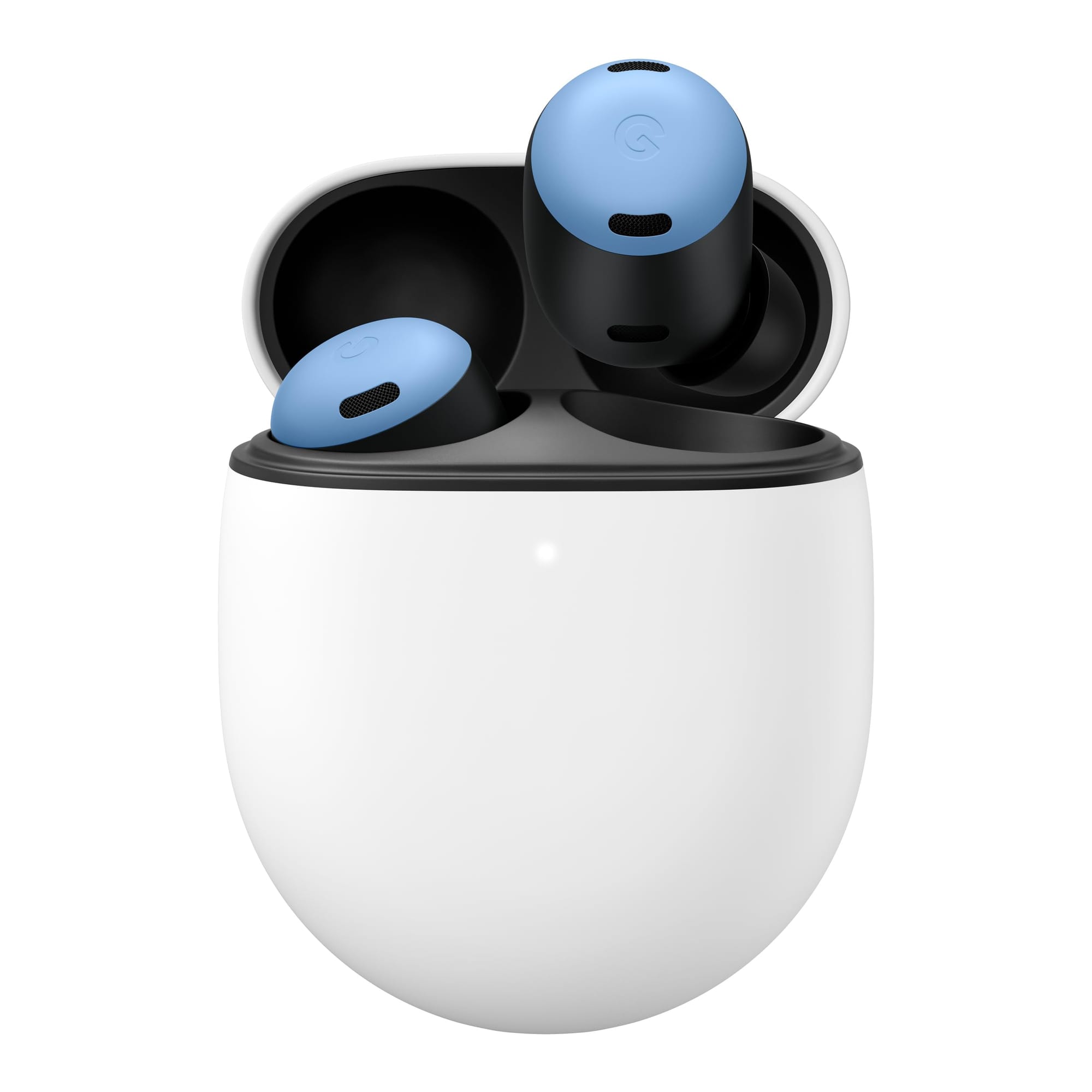
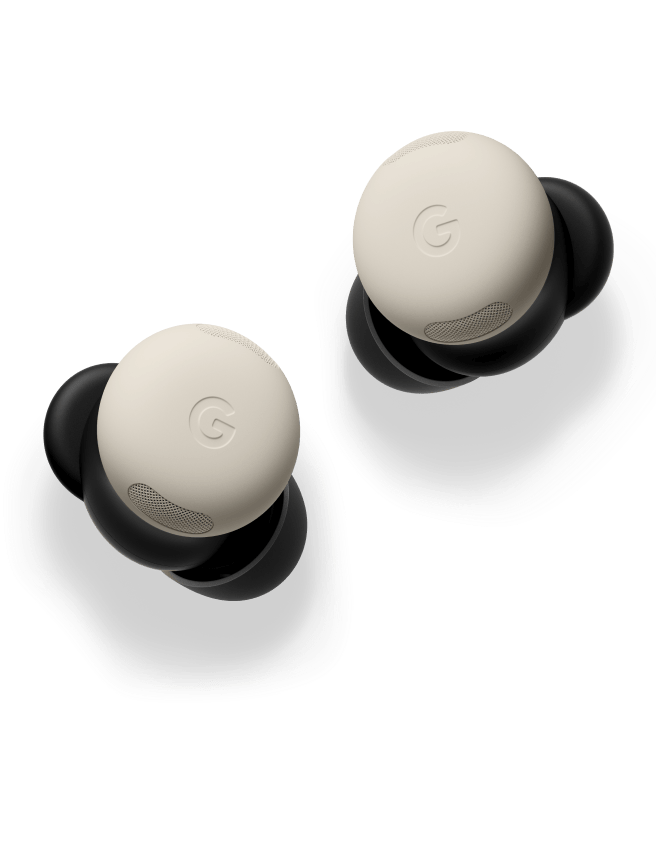
Google’s Pixel Buds Pro (released mid-2022) are compact true wireless earbuds with a smooth, stemless design. Unlike earlier Pixel Buds models, the Pro version drops the “stabilizer arc” wing-tips for a simpler in-ear fit, improving comfort. Each earbud comes with silicone tips in multiple sizes to ensure a snug seal. The oval charging case (available in four colors) has a pebble-like shape similar to the Pixel Buds A-Series case (about 10–15% larger). Both the earbuds and case are water-resistant (buds IPX4, case IPX2), making them suitable for workouts and light rain.
The Pixel Buds Pro include:
- Active Noise Cancellation (ANC) and a transparency (ambient sound) mode, letting you either block out or hear surrounding noise as needed.
- Hands-free Google Assistant for voice commands (play/pause, volume, etc.) and even on-device translation support in conversation mode.
- Multipoint Bluetooth pairing (connect to two devices at once) and Google Fast Pair for quick setup between phones, tablets, and laptops.
- Water/sweat resistance (earbuds rated IPX4) for use during exercise or in light rain.
The Pixel Buds Pro deliver strong audio and reliable performance. Reviewers note clear, well-balanced sound and effective noise canceling. They also feature an in-ear detection sensor that automatically pauses audio when you remove an earbud. Battery life is rated up to about 7 hours per charge with ANC on (11 hours with it off), and the compact case provides roughly two full extra charges (around 30 total hours). The case supports both USB-C wired charging and Qi wireless charging. Connectivity is much improved over earlier Pixel Buds: the earbuds use Bluetooth 5.0 with Google’s Fast Pair and show virtually no dropouts in testing. They also support automatic device switching (multipoint pairing) between two connected devices.

 Nidhi Rathi
 Joel Meares
 Molly McHugh-Johnson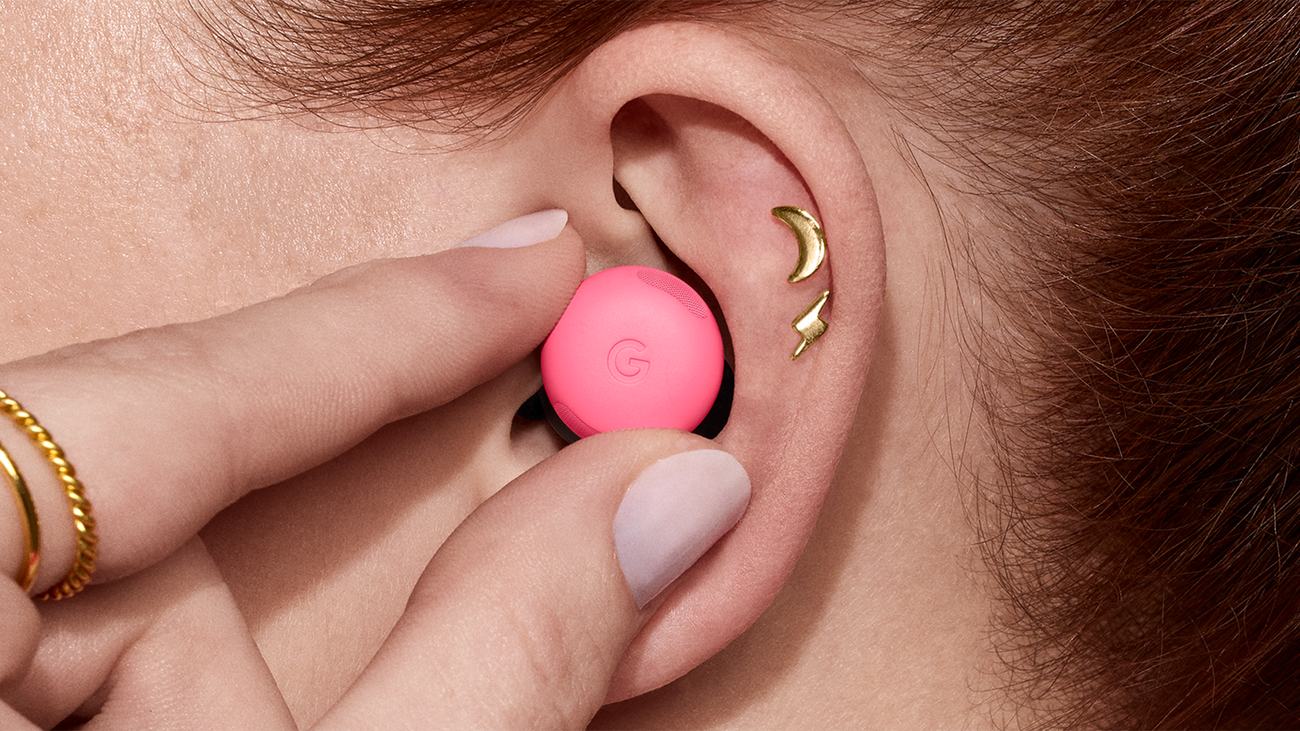
 Ivy Levine
 Google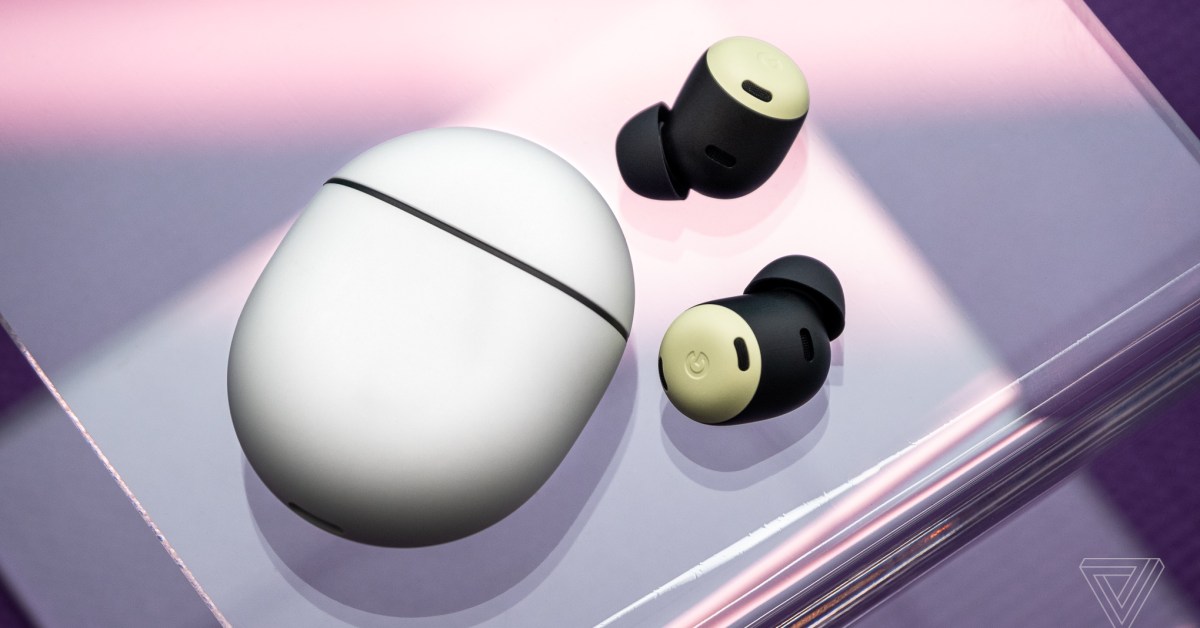
 See full bio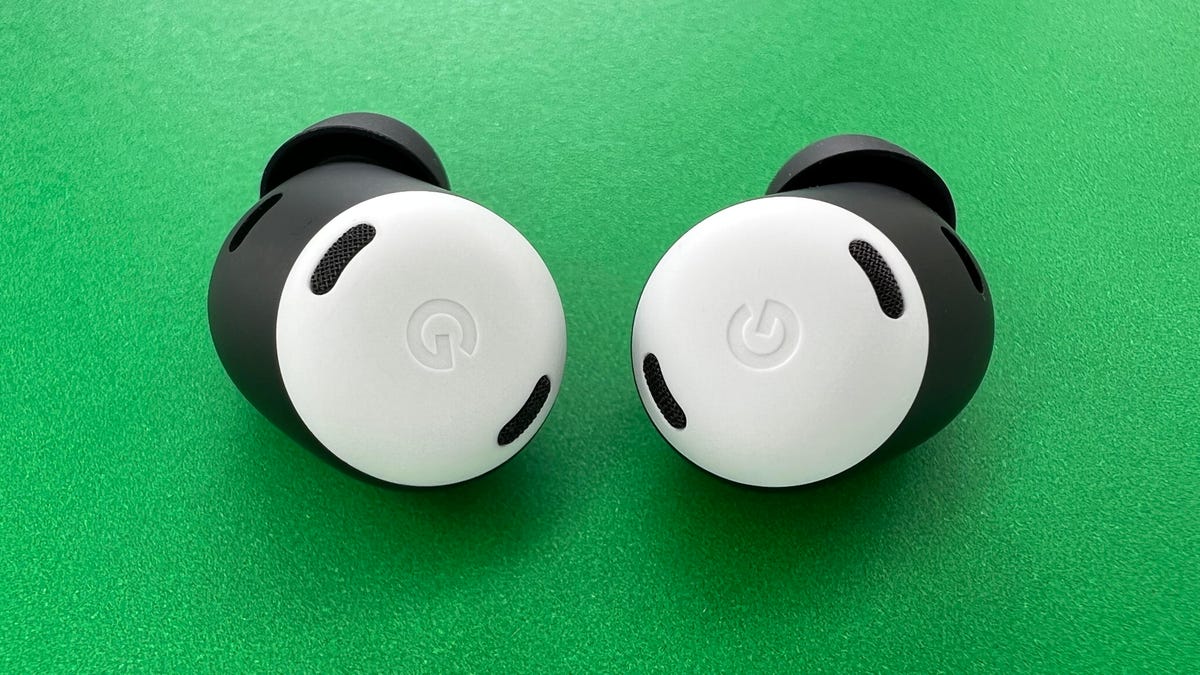
 Jasper Lastoria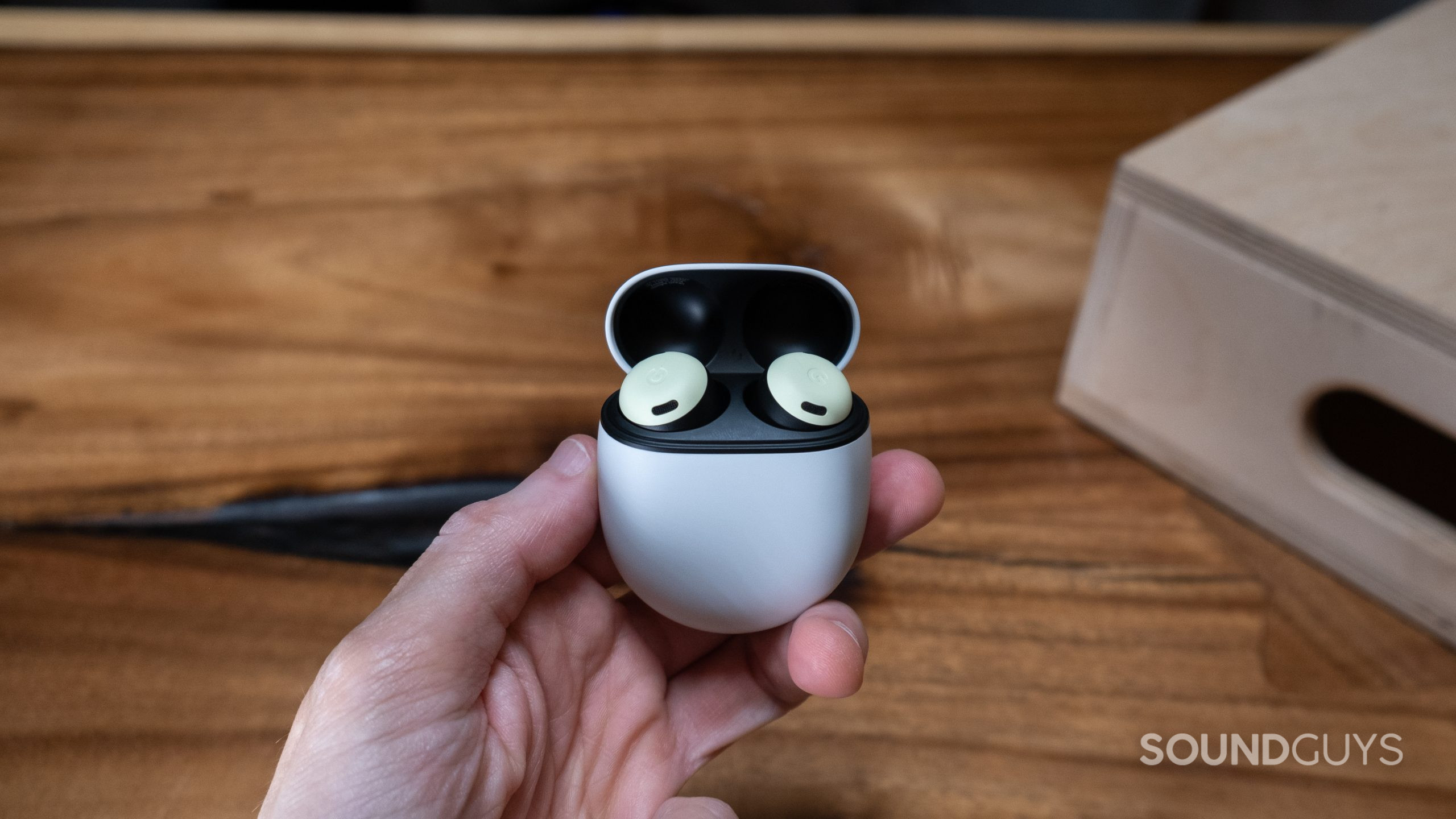
)
Nest Indoor Camera
Nest Cam tells you more about what’s going on inside.
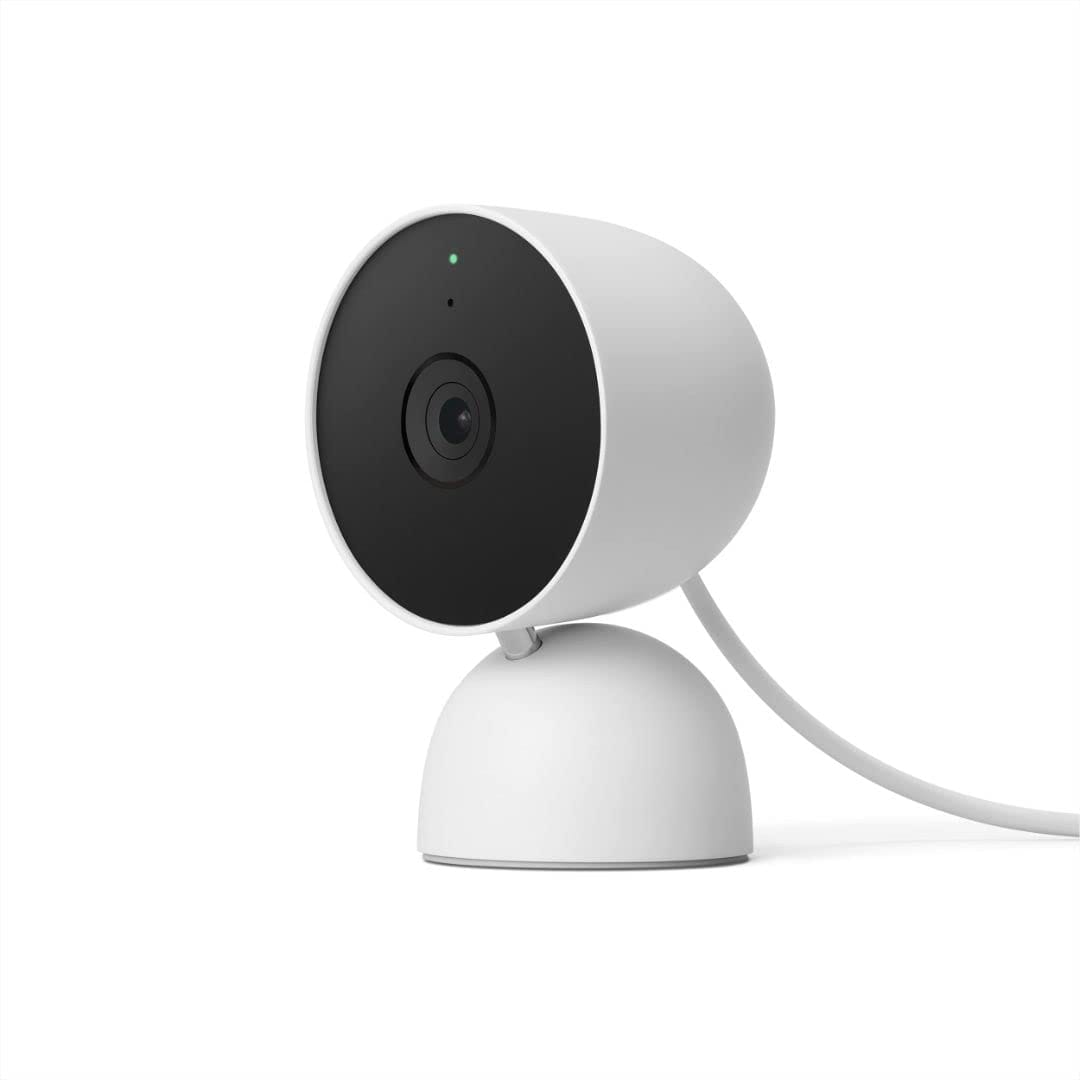
Google’s Nest Indoor Camera is a small home security camera designed for indoor use. It has a compact, rounded body and comes in neutral colors so it can blend into home decor. The camera can sit on a shelf or table using its built-in stand, or be mounted on a wall with the included bracket and screws. It connects to your home Wi-Fi network and streams live video to your smartphone or tablet through the Google Home app.
The camera records full high-definition (1080p) video and uses a wide-angle lens (about 135 degrees) to capture a broad area. It also uses high-dynamic-range (HDR) imaging to improve detail in bright and dark parts of the scene, and it has infrared night vision to see clearly even in low light. A built-in microphone and speaker allow two-way communication through the app, so you can listen to and speak with people or pets near the camera. Together, these video and audio features let you keep an eye on a room and even interact with anyone there while you’re away.
One of the camera’s key smart features is motion detection. If the camera detects movement, it automatically sends an alert to your phone. You can then open the live video feed in the Google Home app at any time to check on what’s happening. The camera also has a small LED light (usually green) that turns on when it is recording or streaming. This visual indicator lets people nearby know the camera is active and helps address privacy concerns.
Setup is straightforward and user-friendly. You plug the camera into a standard wall outlet using the supplied USB cable, then open the Google Home app on your phone to complete the setup. The app guides you through connecting the camera to your Wi-Fi network and naming the device, so most people can have it running in just a few minutes. This simple process means advanced technical skills are not needed to start using the camera.
The Nest Indoor Camera is part of Google's Nest line of smart home devices and integrates with the Google Home app and other Nest products in the same household.


Missouri S&T Satellite Team: Mr & Mrs Satellite
Missouri made. Space grade.
In February 2015, Missouri University of Science and Technology won the Air Force's Nanosat-8 competition, beating MIT, Georgia Tech, and seven other universities. Their winning design: two satellites that would perform proximity operations in space, demonstrating inspection capabilities for non-responsive spacecraft. Nearly a decade later, these satellites are finally ready for launch.
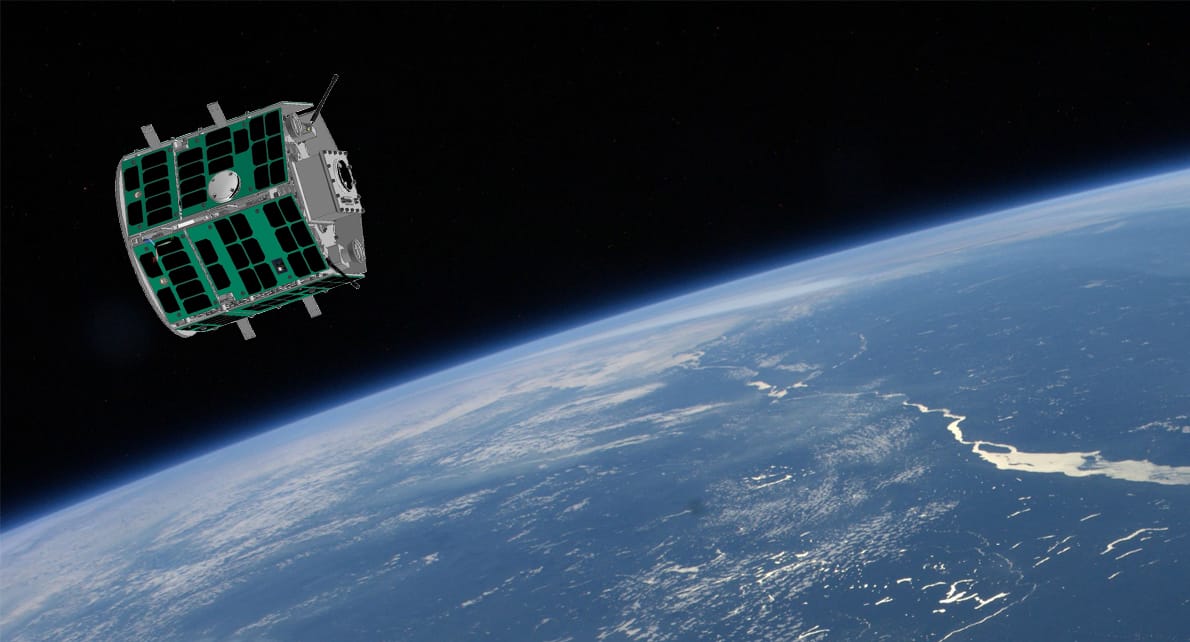
Background
Missouri S&T hired Dr. Hank Pernicka in 2001 to establish their aerospace engineering program. By 2005, the university was competing in national satellite competitions. Dr. Pernicka set clear expectations for his students: "dealing with spacecraft, close to 100% is required for success."
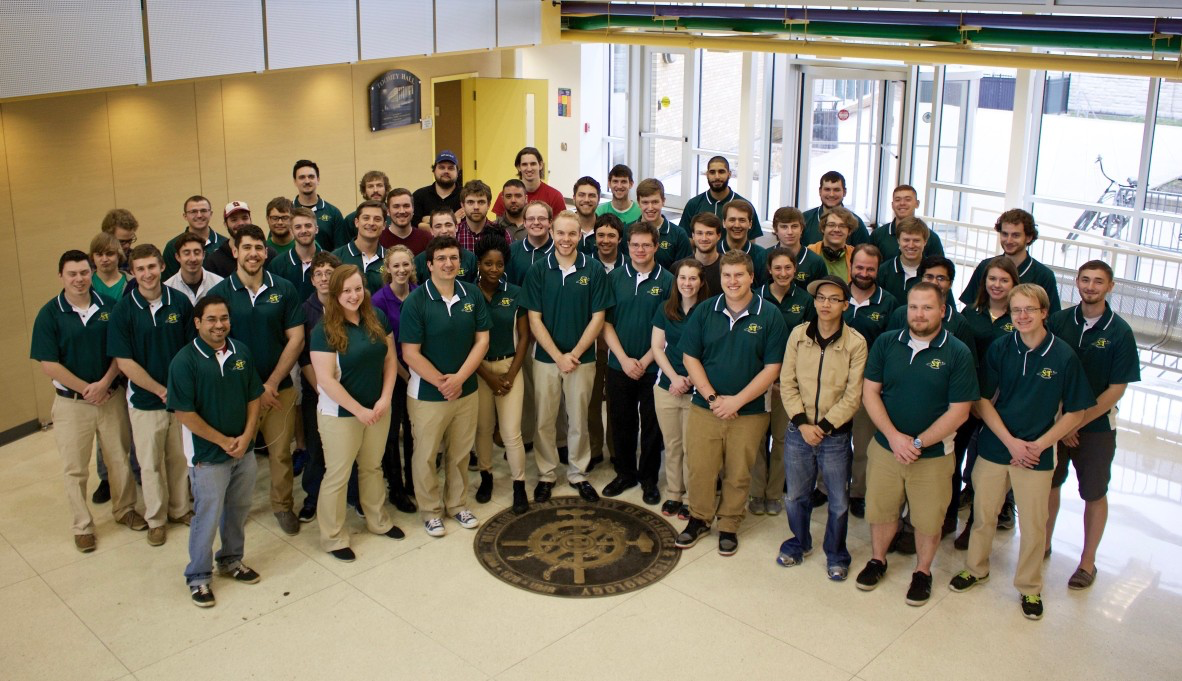
The Missouri S&T Satellite Team (M-SAT) grew from a single course to a 50-person multidisciplinary team by 2015. Their competition history included third place in Nanosat-4 and second place in Nanosat-7, where they notably outperformed MIT.
The Nanosat-8 Competition
The University Nanosat Program, funded by the Air Force Office of Scientific Research, challenges universities to develop flight-ready satellites. Nanosat-8, launched in 2012, focused on proximity operations and space situational awareness – capabilities with direct military applications.
Ten universities competed over two years. The final review occurred January 18-19, 2015, at Kirtland Air Force Base. Winners would receive Air Force launch services for their satellites.
The Mr & Mrs Sat Design
Missouri S&T proposed a two-satellite system:
- MR SAT (Missouri-Rolla Satellite): The inspector satellite
- MRS SAT (Missouri-Rolla Second Satellite): Simulates an uncooperative space object
The mission addresses a practical problem. When satellites malfunction or stop responding, operators need to assess damage without risking astronaut spacewalks or expensive replacement missions. Mr & Mrs Sat demonstrates autonomous inspection at a 10-meter distance.
Key Technical Innovations
Stereoscopic Imaging: Custom dual-camera system creates real-time 3D images, allowing precise position and velocity measurements in space.
R-134a Propulsion: Instead of expensive spacecraft propellants, the team used R-134a refrigerant – the same compound found in automotive air conditioning. The cold gas system, stored in a container roughly the size of a 2-liter bottle, provides six degrees of freedom for formation flying. Cost: about $20 per bottle versus thousands for traditional propellants.
Autonomous Control: The Self-sufficient, Accelerated Spacecraft Integration Flight Control System (SASI FCS) maintains formation without ground intervention, critical for practical operations.
Development Challenges
Dr. Pernicka warned students the project would be "underfunded and due in two years – a ridiculous deadline for normal satellite design." Air Force safety requirements added complexity.
Anna Schroeter, Program Manager, coordinated 9 subsystems and 25+ personnel. Her responsibilities included budget proposals, Air Force coordination, and systems integration across multiple engineering disciplines.
The psychological toll was significant. As Dr. Pernicka noted, "Sometimes they fail spectacularly. It's part of the business." Students invested years in projects that could fail during launch or in orbit.
From Competition to Flight Hardware
Winning in 2015 guaranteed launch services but required transforming academic designs into flight-qualified hardware. This meant:
- Space qualification for every component
- Redundancy for all critical systems
- Testing for launch vibrations, thermal cycling (-100°F to +200°F), and radiation exposure
The process took nearly a decade. By Summer 2024, flight-ready satellites were delivered to the Air Force Research Laboratory. Multiple student generations contributed to the project through graduation cycles and the COVID-19 pandemic.
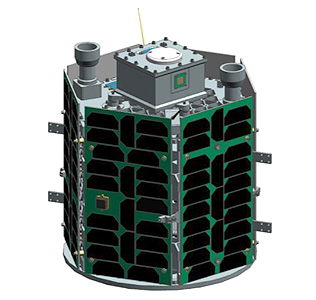
Mission Profile
The satellites will likely launch on a SpaceX Falcon 9, possibly via the International Space Station. Once deployed, they'll demonstrate:
- Automated proximity operations
- 3D imaging and reconstruction
- Formation flying using low-cost propulsion
Primary mission duration: 4 months
Expected operational life: 2-4 years
Applications include military satellite inspection, commercial satellite diagnostics, and development of future servicing missions.
Educational Impact
The program has produced over 11,000 alumni across 25 years. Many work at NASA, SpaceX, Boeing, and other aerospace companies. Students gain end-to-end spacecraft development experience unavailable in traditional academic programs.
Joseph Nguyen exemplifies the program's reach. A first-generation college student who initially found undergraduate research "a little too challenging," he became Student Director. His scholarship letter stated: "As the first male in my family to attend college, your scholarship will financially assist my family in the expenses of my attendance. I hope to make my community proud and hope to make you proud as a student who dared to change his future."
Technical Significance
The R-134a propulsion system demonstrates how cost constraints drive innovation. If university students can achieve precision formation flying with hardware store refrigerant, the approach could benefit budget-conscious small satellite operators.
The stereoscopic imaging system addresses growing needs for space situational awareness as orbit becomes more congested. Autonomous inspection capabilities have clear national security applications.
Looking Forward
Mr & Mrs Sat awaits launch within 1-2 years. The approaching milestone represents a decade of student effort, technical problem-solving, and persistence through setbacks.
When these satellites finally reach orbit, they'll prove that the greatest space achievements don't always come from billion-dollar budgets or prestigious institutions – sometimes they come from Missouri students with the audacity to make hardware store refrigerant fly. In the cold vacuum above, Mr & Mrs Sat will dance on air conditioning dreams, showing the world that innovation thrives on constraint, that ridiculous deadlines can forge real spacecraft, and that true engineering genius isn't about having the most resources but about having the nerve to reach for the stars with whatever's in your toolbox. They'll orbit as monuments to every student who dared to believe that a hardware store trip could be the first step to space – and that sometimes, the most extraordinary achievements begin with the most ordinary tools.

Mercedes-Benz NTG5 STAR2
Fully integrated high-end multimedia system with 6-disc DVD changer, hard-drive navigation system, internet browser, telephony plus DVD video and Music Register, shown on high-resolution 21.3 cm colour TFT display.
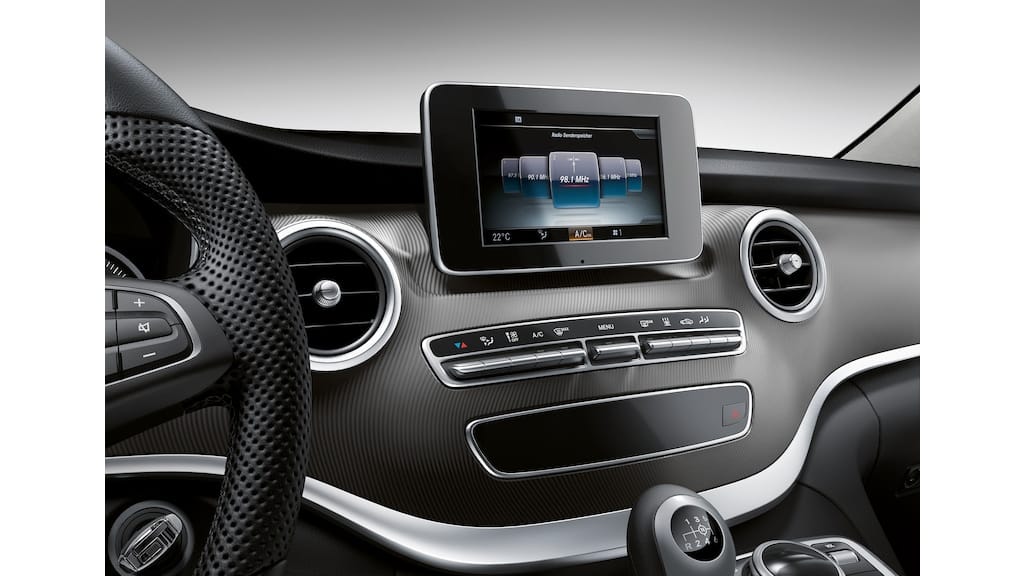
The NTG Star2 is a mid-2010s Mercedes-Benz in‑car navigation/infotainment system (part of the COMAND/Audio20 series). In practice it was the NTG5‑generation system used in models like the W205 C‑Class, W222 S‑Class, GLC, etc. For audio and navigation it typically used the standard 7″ (17.8 cm) TFT display and console controller. Importantly, NTG Star2 used Garmin’s “Map Pilot” technology for GPS navigation in Audio20-equipped cars – inserting a Garmin SD‑card lets the Audio20 unit run 3D maps and routing. (The COMAND head unit itself was Mercedes-made, but Garmin supplied the map/database software.)
NTG Star2 debuted around 2014–2015 as the successor to the NTG4.5 COMAND system. Mercedes introduced it on new models (for example, the 2015–2020 C‑Class W205 and later E‑Class and GLC) as COMAND Online (NTG5) hardware. These NTG5/Star2 units featured a built‑in hard drive for media and optional CD/DVD storage. Around 2018–2019 Mercedes began updating Star2 to a new software version called “Star1” (this was essentially a software revision to enable features like Apple CarPlay). As one forum noted, “my new [head unit] is called NTG Star1 and CarPlay works – the old one was NTG Star2”. (In other words, Star2 was the original NTG5 software on older Audio20 hardware; Star1 was the newer update with smartphone integration.)
Today NTG Star2 systems remain supported through Mercedes accessories and parts. Mercedes still sells Garmin Map Pilot SD navigation cards and software updates for NTG5/Star2 systems. For vehicles that came with NTG Star2, a dealer or owner can purchase official updates (e.g. Europe 2020/2021 map packs) for the Garmin Map Pilot. Mercedes also offered an accessory COMAND Online head unit upgrade with DVD changer – a high-end multimedia unit with a 6‑disc changer and hard‑drive nav that replaces the original unit. In short, the NTG Star2 system remains available on its original models (C‑Class, S‑Class, etc.) and can be serviced or upgraded using genuine Mercedes parts (for example, the COMAND Online unit with DVD changer or Garmin Map Pilot module).
While Mercedes-Benz designed the NTG Star2 hardware and user interface, Garmin’s involvement was confined to the navigation content. On Audio20/NTG5 Star2 cars, Garmin supplied the Map Pilot navigation module (SD card and software) that plugs into the Mercedes system. There is no ongoing Garmin development of NTG Star2 itself – Garmin’s input was the map database and guidance engine. All system updates (DVD/DVD changer upgrades or map updates) are handled through Mercedes-Benz parts (including Garmin-branded map cards sold by Mercedes).
